AIA Document A201-2017. Spoiler. It’s the Owner.
Division: Construction and Evaluation
Section 3: Administrative Procedures & Protocols (32-38%)
Objective 4: Evaluate responses to non-conformance with contract documents
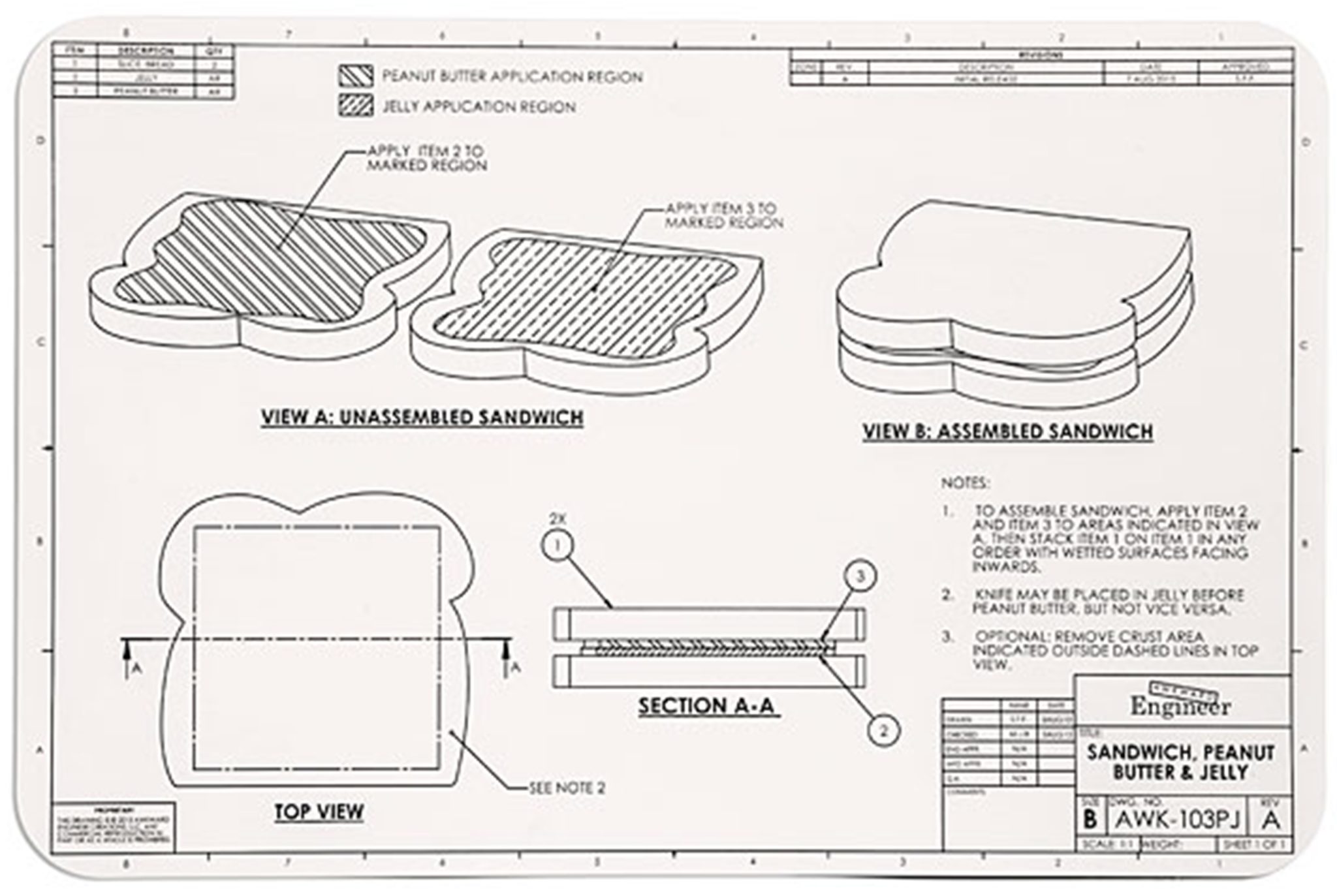
During a routine inspection to determine if the sandwich is substantially complete. The architect suspects that the contractor used chunky peanut butter instead of smooth as required by the specifications. In accordance with AIA Document A201-2017, General Conditions of the Contract for Construction, the architect requests to see the peanut butter. The contractor disassembles the sandwich, which exposes smooth peanut butter.
Who pays for uncovering the peanut butter and reassembling the sandwich?
The owner
According to AIA Document A201-2017, Article 12, Uncovering and Correction of Work, because the correct type of peanut butter was used, the contractor is entitled to an appropriate adjustment of the Contract Sum and Contract Time.
"Section 12.1.2 If a portion of the Work has been covered that the architect has not specifically requested to examine prior to its being covered, the Architect may request to see such Work and it shall be uncovered by the Contractor. If such Work is in accordance with the Contract Documents, the Contractor shall be entitled to an equitable adjustment to the Contract Sum and Contract Time as may be appropriate."
However, if the work was not in accordance with the contract documents, the contractor is responsible for the cost of uncovering and correcting the Work.
Section 12.1.2 (continued) "If such Work is not in accordance with the Contract Documents, the costs of uncovering the Work, and the cost of correction, shall be at the Contractor's expense."
While the architect’s reputation pays a steep price for the mistake (and for requesting smooth peanut butter when everyone knows that chunky is superior) the cost of uncovering the peanut butter and reassembling the sandwich is at the owner’s expense.
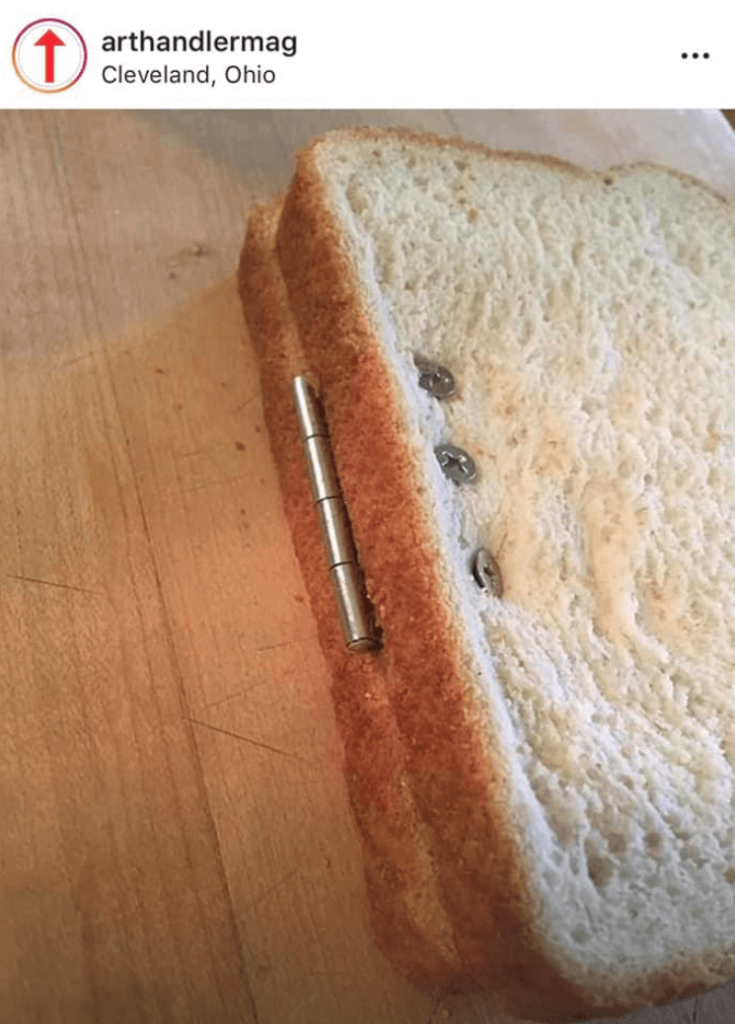
A perfectly impractical solution provided by S Surface via The ARE Facebook Group
Read more about A201-2017:
ARE 5.0; Statute of Repose vs. Statute of Limitations

What is the difference? Inquiring minds want to know. There’s a lot of confusion among ARE 5.0 candidates regarding the Statute of Repose vs. the Statute of Limitations. One reason is that each state sets its own limits on the start date, duration, and end date. Furthermore, these change over time as each state sets a new precedent and updates the law. There is no absolute time limit for each statute; they generally range from 1 to 10 years depending on the state, and there isn’t a... Read More
Joints in Architecture: Understanding the Terminology and Differences for ARE 5.0
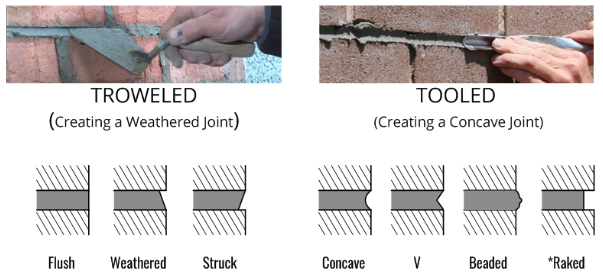
PDD — Section 1, Objective 1.1 or Section 2, Objective 2.3 Terminology in architecture and construction carries a lot of weight. Subtle distinctions in meaning make a big difference among common materials, assemblies, and practices, and using the appropriate terms (especially when writing test questions) is essential. Sill plate vs. sole plate, rift sawn vs. quarter sawn, vapor barrier vs. vapor retarder, to name a few. The terminology used in one practice test... Read More
Nuts and bolts of moment and torque: What you need to know for ARE 5.0
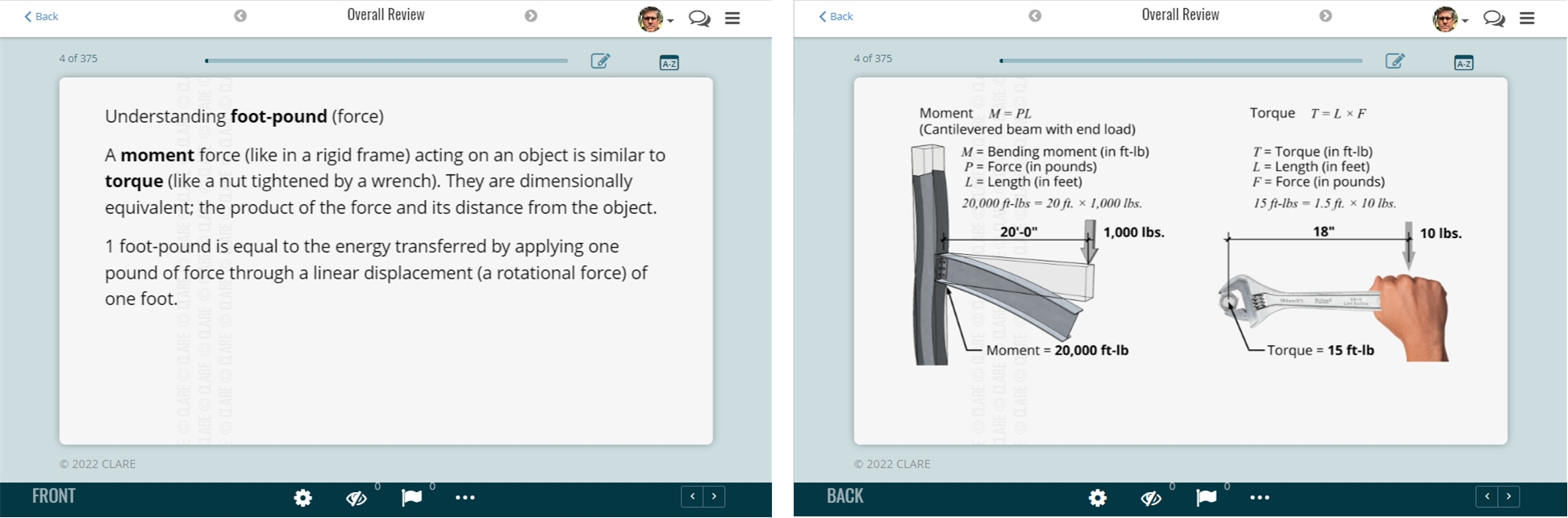
PDD — Section 1, Objective 1.3 Here's an illustration to help you understand the similarity between moment and torque. Bending moment & torque are measured as force ✕ distance The force acting on a beam/column connection is similar to that on a nut/bolt connection when it's tightened by a wrench. They are dimensionally equivalent, i.e., the product of the force and its distance from the connection. In architecture and structural engineering, moment and torque are... Read More
Shading Devices According to the NCARB References
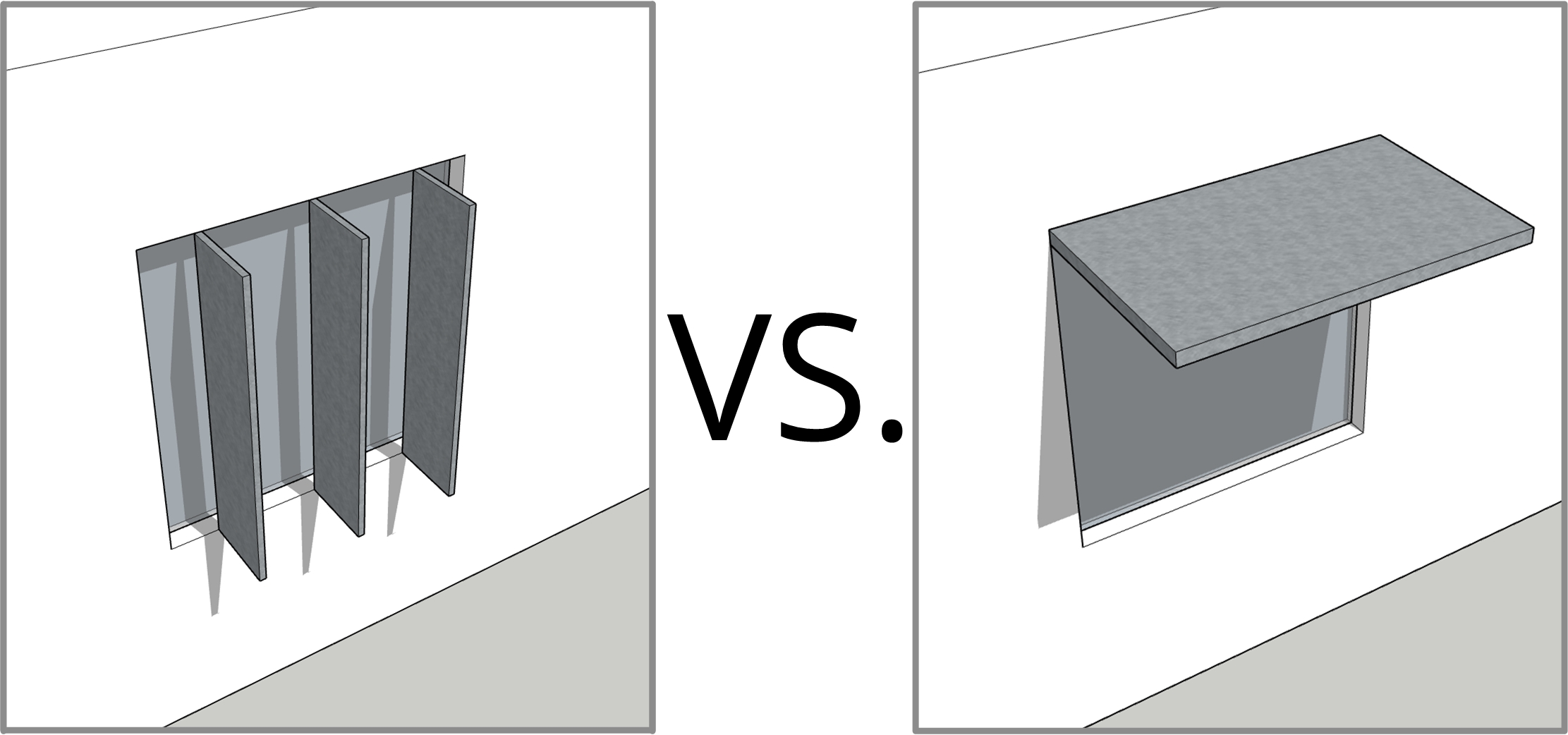
Project Planning & Design Section 1 — Environmental Conditions & Context. Objective 1.2 — Determine sustainable principles to apply to design. Or Section 4 — Project Integration of Program & Systems. Objective 4.4 — Integrate environmental and contextual conditions in the project design. Candidates are entitled to rely on the NCARB references for accurate information. So, what if the references are contradictory? For shading devices, when and where to use... Read More
Rift sawn or quarter sawn? It depends.
Depending on who's talking, the meaning of rift sawn and quarter sawn is quite different. Both terms refer to log cutting methods AND the boards those methods produce. Let's sort it out. Project Planning & Design Section 3 — Building Systems, Materials, & Assemblies Objective 3.4 — Determine materials and assemblies to meet programmatic, budgetary, and regulatory requirements Wood — Log Cutting vs. Board Identification Log Cutting There’s a lot more on... Read More
ARE 5.0 Acoustics Formula — Frequency vs. Wavelength
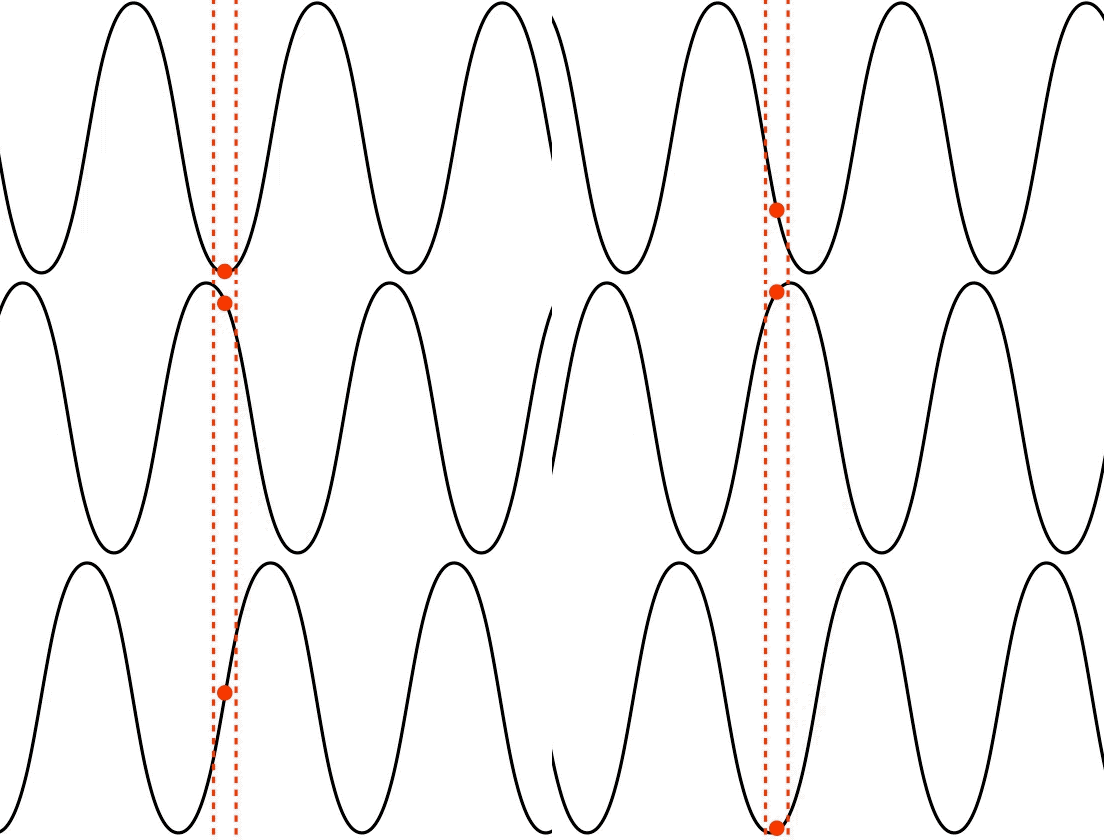
The wavelength formula is among the four ARE acoustics formulas listed in the NCARB ARE Guidelines . Let's check out the relationship between wavelength and frequency. Project Planning & Design Section 3 — Building Systems, Materials, & Assemblies Objective 3.3 — Determine special systems such as acoustics Excerpted from the CLARE article, Acoustics and Design Strategy. Through design, we can influence the sounds we want to hear and eliminate those we don’t.... Read More
ARE 5.0 Practice Exams – How To Use Them Wisely.
There’s a ton of ARE 5.0 practice exams out there. But a solid test question is hard to write. With the help of psychometricians, NCARB relies on an army of volunteers to write, review, revise, and test Architect Registration Exam questions before they’re unleashed on candidates. The fact that candidates still have issues with NCARB’s exam questions is evidence of the writing challenge. I’d argue that no third-party ARE 5.0 practice exam questions have been as thoroughly vetted, and... Read More
The Architect May Have Liability Too
PcM - Section 1, Objective 3 (Architect liability) CE - Section 2, Objective 1 (Architect liability) This question comes up regularly. On a routine site visit, an architect witnesses an unsafe condition. What to do? I often hear, “Say nothing, because of the architect’s potential exposure to liability.” Seems like a safe approach, but is this really what it’s come to? Not only is the “say nothing” response morally suspect, but it’s arguably a violation of more than... Read More
A Familiar ARE 5.0 Debate – AIA A201
AIA A201-2017™, General Conditions of the Contract for Construction. ARE Division: CE - Section 4, Objective 4.1 Question: The punch list. Who provides it? The Short Answer: The contractor. Why? Because it says so in § 9.8.2 AIA A201-2017™, General Conditions of the Contract for Construction. The Long Answer: The actual practice of architecture often diverges from how AIA A201-2017 says it’s supposed to work. For answering exam questions, this is a recipe for the confusion that... Read More